FintechZoom Dis Stock - Competitive Stock Analysis of Walt Disney
Note: FintechZoom Pro is independent and not affiliated with, endorsed by or associated with FintechZoom.com or FintechZoom.io. "FintechZoom" in this title is the search term readers use, not a reference to that company. This guide is for information only, not financial advice.
FintechZoom DIS stock refers to shares of The Walt Disney Company (NYSE: DIS), a global entertainment company whose share price is driven mainly by its theme parks, streaming subscriptions (Disney+, Hulu and ESPN+), film and TV content, and the wider economy; Disney is not a fintech company and has no link to "FintechZoom". This guide covers Disney's history, how to read its fundamentals and charts, the factors that move the stock, the main risks and points investors usually consider. It is general information, not investment advice.
Key takeaways
- "FintechZoom DIS stock" is a search term for Walt Disney stock; Disney and FintechZoom Pro are not connected, and Disney has not become a fintech company.
- Disney's value rests on its brands, including Pixar, Marvel and Star Wars, its parks and its streaming services.
- Theme park attendance, streaming subscriber trends and new content are the biggest business drivers of the share price.
- Like any stock, DIS carries risks: recessions, competition, content quality, cybersecurity and regulation.
- The stock has had strong periods and sharp declines, for example during the COVID-19 park closures.
What is Disney's live stock price?
The chart below shows Disney's live share price on the New York Stock Exchange.
Disney is one of the most followed entertainment stocks. Its famous cartoon characters and hit film series are loved by millions of viewers worldwide, which keeps the company in investors' attention.
November 2026 update. The Walt Disney Company closed at $116.75 on November 6, 2026.
Source: Yahoo Finance historical prices.
Note that earlier versions of this article described Disney as "taking over the fintech space". That is not accurate: Disney is a media and entertainment company. This article reviews its business, recent news and market trends to help readers understand the stock, not to recommend buying or selling it.
What is The Walt Disney Company?

The Walt Disney Company is an entertainment powerhouse founded in 1923 by brothers Walt Disney and Roy O. Disney. It grew into one of the world's best-known media companies, enjoyed by both children and adults.
Over the years Disney expanded its portfolio by acquiring iconic brands, including Pixar, Marvel and Lucasfilm, the home of Star Wars. Disney+ subscriptions have added another large audience. The stock is closely watched, especially after the challenges Disney faced during COVID-19.
| Fact | Detail |
|---|---|
| Company | The Walt Disney Company |
| Ticker | DIS on the New York Stock Exchange |
| Founded | 1923, by Walt Disney and Roy O. Disney |
| NYSE listing | 1957 |
| Key brands | Disney, Pixar, Marvel, Star Wars (Lucasfilm) |
| Streaming services | Disney+, Hulu, ESPN+ |
| Theme parks | Disneyland, Walt Disney World and other resorts |
How has Disney stock performed over time?
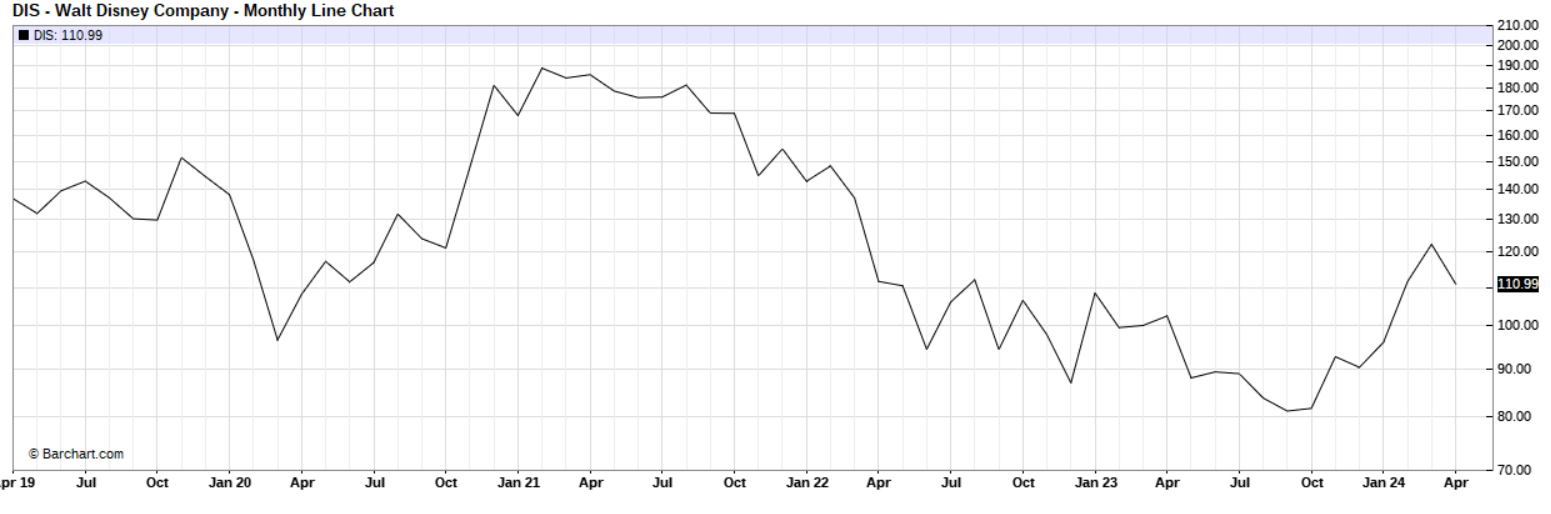
Over the long term Disney has grown into a large-cap company through strong content, parks and acquisitions, but its share price has also gone through major swings. Market dynamics help explain its competitive position. Key points from its history:
- Long-term growth: over the past decades, rising viewership, parks and later streaming subscriptions helped the share price grow substantially.
- Dividends: Disney has a long history of paying dividends, but it suspended its dividend in 2020 during the pandemic and reinstated it in late 2023.
- Stock splits: Disney split its stock several times in past decades, which kept the share price more accessible to investors.
- Earnings and market value: Disney has shown periods of strong earnings growth and has a high market capitalisation, supported by content that often exceeds viewers' expectations.
- Valuation: Disney has often traded at a relatively high price/earnings (P/E) ratio, which means investors have been willing to pay more for each dollar of earnings in expectation of future growth.
| DID YOU KNOW? |
| According to the New York Times' latest news, Disney has shifted to a new era of Fintech innovations. It says that Disney has embraced blockchain technology, digital payments, and digital application production to keep up with the latest FintechZoom Disney stock trends. |
How do you analyse Disney's fundamentals?

Fundamental analysis looks at Disney's revenue growth, profit levels and valuation ratios to judge its financial health and market value.
Revenue growth shows whether Disney can increase its sales over time, while profit levels show how much of that revenue turns into earnings, typically measured quarterly and yearly. Comparing valuation ratios over the years adds context:
| Ratio | How it is calculated | What a higher value usually means |
|---|---|---|
| Price/Earnings (P/E) | Share price divided by earnings per share | Investors pay more per dollar of profit, often expecting growth |
| Price/Sales (P/S) | Market value divided by revenue | Investors pay more per dollar of sales |
| Price/Book (P/B) | Share price divided by book value per share | The market values the company well above its net assets |
Disney has a share price, a market value and a book value. A high P/B ratio means the market values Disney well above the net assets on its balance sheet, often reflecting the value of its brands and content.
How do you read Disney's technical analysis?

Technical analysis studies Disney's price charts and trend lines to understand past price movements and current momentum. Comparing today's price with its history helps show demand for the stock and its trend. According to Trading View’s Latest Graph on Disney Stocks, we found the following values:
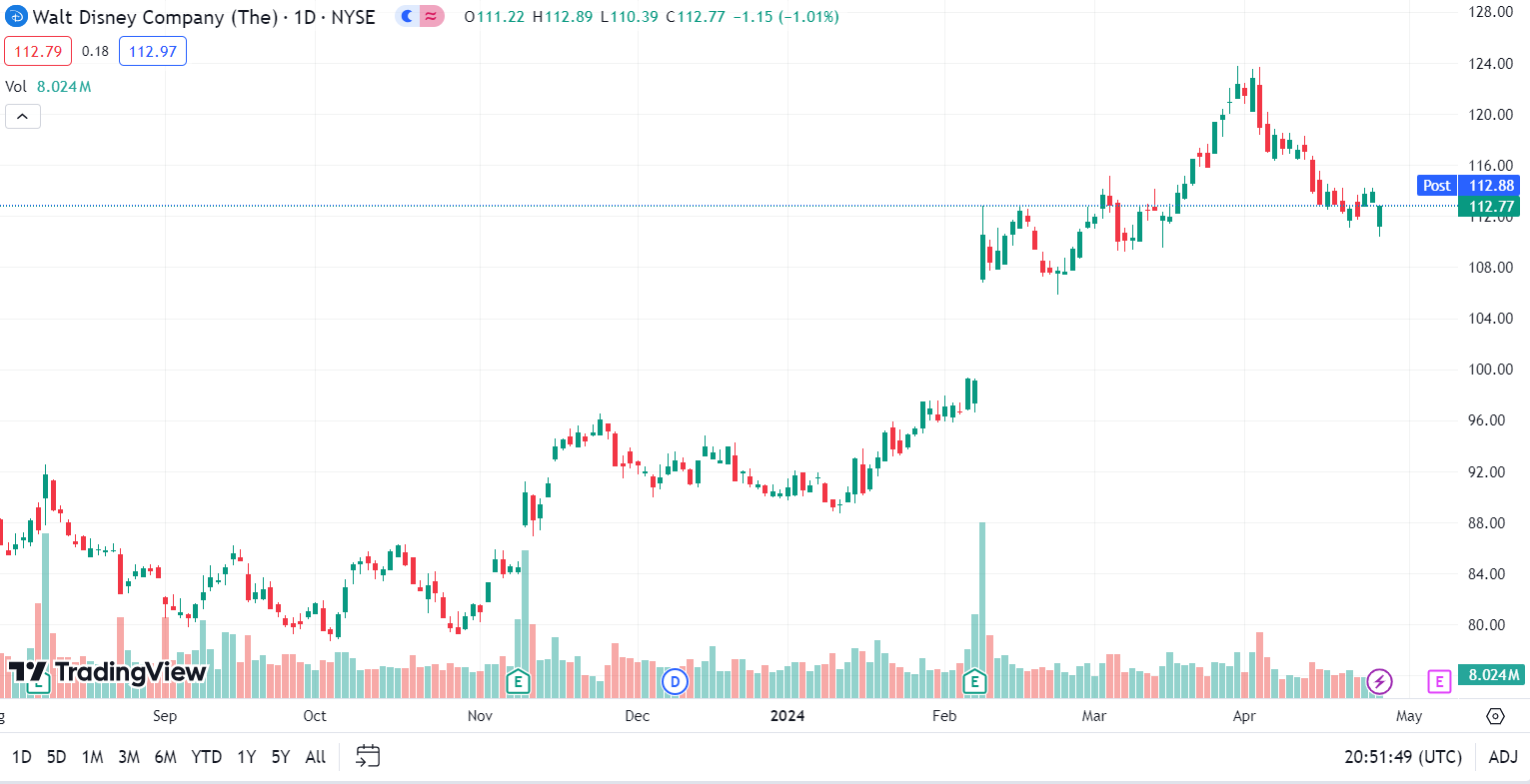
Trend lines on charts like this help investors see where the price sits relative to its recent range. They help interpret momentum, but they cannot reliably predict future prices.
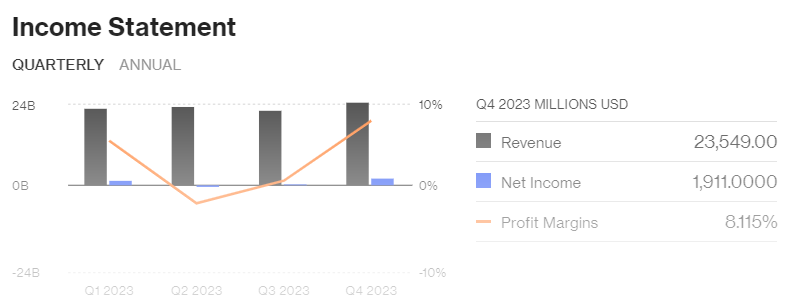
At the time of writing, Bloomberg's quote page for Disney (DIS:US) showed the following values:
What is Disney's cultural and market legacy?
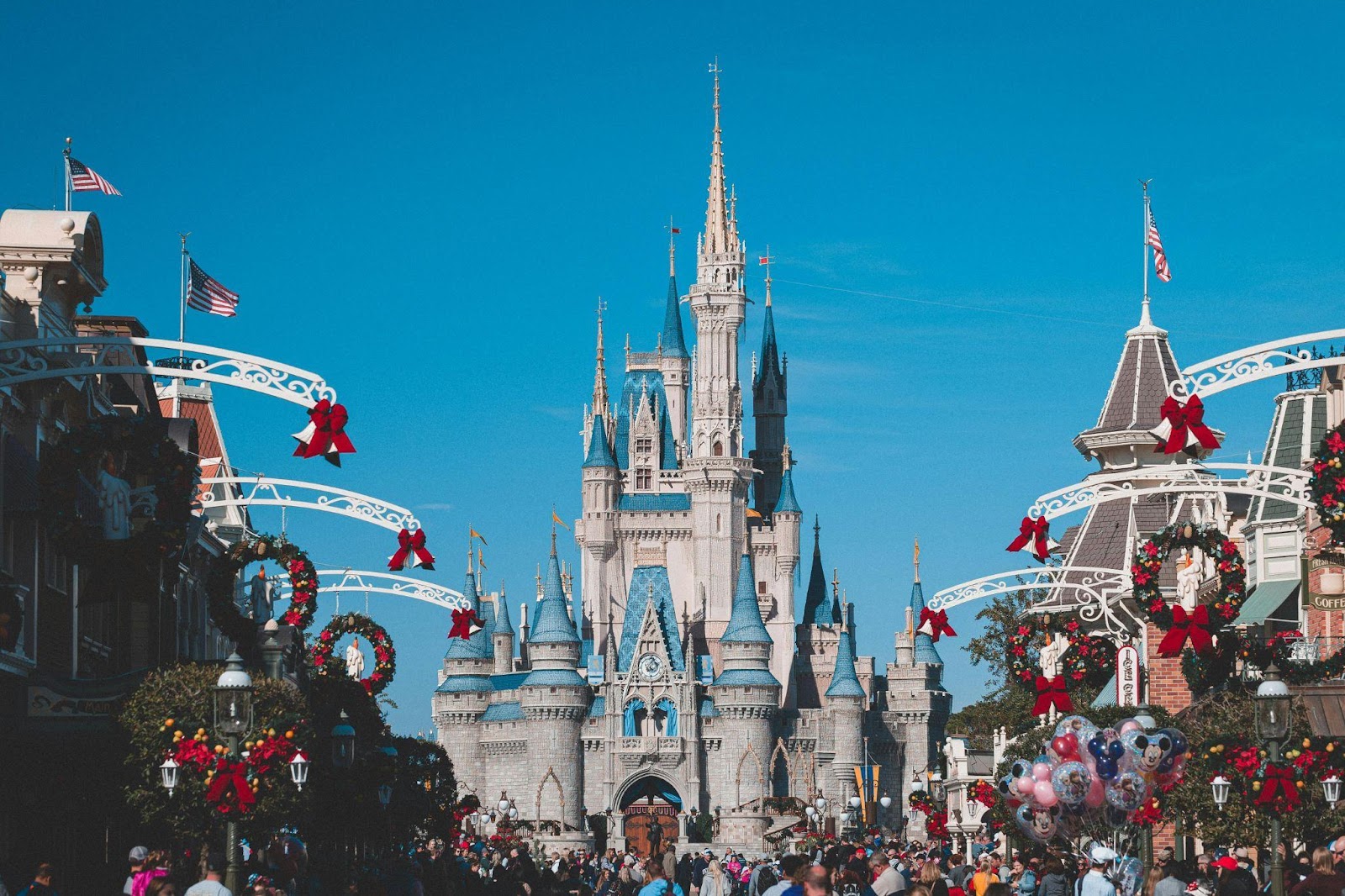
Disney listed on the New York Stock Exchange in 1957 and has become part of popular culture as well as a long-standing stock. Its characters, films and parks are recognised around the world, and that brand strength is one reason investors follow the stock.
On a split-adjusted basis, Disney shares once traded at around $1. The stock reached its all-time high of just over $200 per share in March 2021, during the strong growth of Disney+, before falling back. These numbers show how much the price can rise and fall over time.
| DID YOU KNOW? |
| Disney’s startup of Pixar animation in 2006 not only built an iconic cartoon line for people; it also shed light on some talented masters of the industry. An ideal example of this would be Steve Jobs, who Disney introduced. Yet, he is currently the most renowned and largest shareholder of Disney! |
What consumer payment and digital trends involve Disney?

Disney uses ordinary digital tools for its customers, such as online payments, apps and loyalty cards, but these are features of its consumer business, not a fintech operation.
- Digital payments: customers can pay for subscriptions, tickets and merchandise with a range of online payment methods.
- Apps: the Disney+ app and Disney's park apps give customers convenient access to content and services on phones and other devices.
- Loyalty programs: the Disney Visa Card, issued by a partner bank, earns Disney Rewards, and Disney runs various promotions to attract customers.
- Blockchain: earlier versions of this article claimed Disney uses blockchain for payments worldwide; we found no evidence of this, so the claim has been removed.
| DID YOU KNOW? |
| Ever since Disney+ launched in 2019, Disney has been famous for gaining over a million subscribers in less than a year. According to Forbes, Disney has increased its market and stock value within a matter of a few days. |
What factors affect Disney's stock price?

Disney's share price moves with theme park attendance, streaming subscriptions, new content and the wider economy and market sentiment.
| Factor | Why it matters |
|---|---|
| Theme park attendance | Parks are a major source of revenue; attendance changes affect results |
| Streaming subscriptions | Subscriber growth or losses at Disney+, Hulu and ESPN+ affect revenue expectations |
| New content | Hit films and series drive box office, subscriptions and merchandise |
| Economy and markets | Consumer spending, interest rates and sentiment move the stock |
- Popularity of theme parks
Disney's parks, including Disneyland and Walt Disney World, are among its best-known businesses, and many people dream of visiting at least once. Walt Disney World's parks include themed areas built around magic, animals and Hollywood (Magic Kingdom, Animal Kingdom and Hollywood Studios). Attendance varies over time, and those changes can have a large effect on Disney's results and share price.
- Streaming subscriptions
Disney runs several popular streaming services, including Hulu, which it now controls, ESPN+ and its flagship Disney+. These paid services give subscribers access to new content. If subscriber numbers fall short of expectations, the stock is often affected.
- Market and economic trends
Earlier versions of this article said fintech trends drive Disney's stock. In reality, the broader market matters more: interest rates, consumer spending and investor sentiment affect Disney like other large companies.
- Production of new content
Disney is known for constant new content, from its princess films to the Marvel superhero series, which has built a huge fan base. Fans eagerly await sequels, and successful releases can support revenue and investor confidence, while disappointing ones can weigh on the stock.
According to CNN, at the time of writing Disney stock had fallen because streaming subscription growth was slowing.
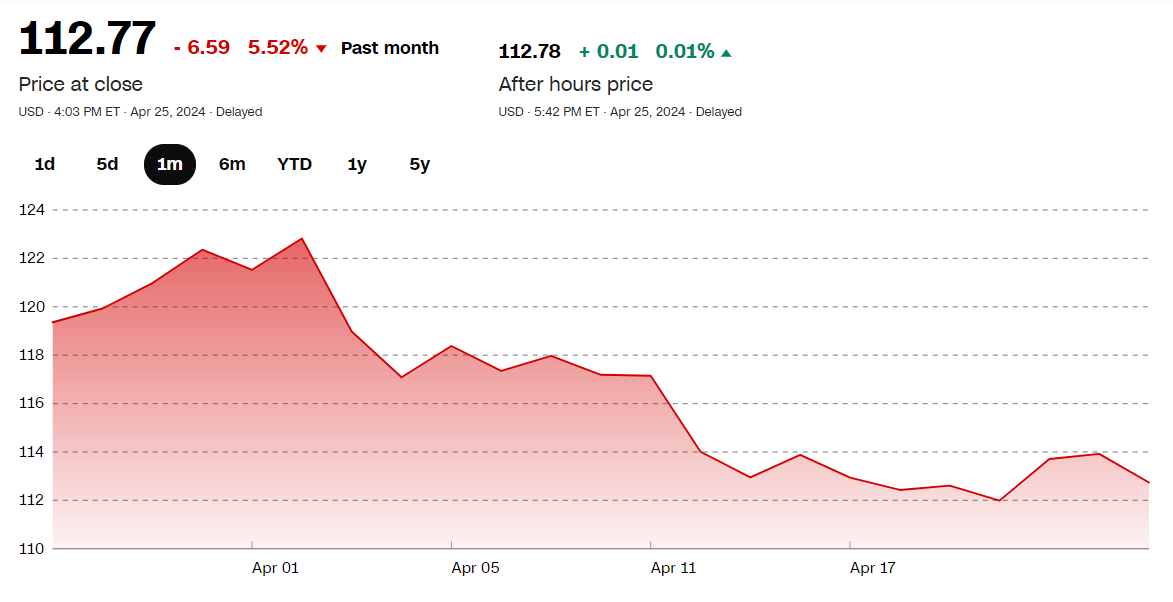
The graph showed that Disney shares had lost significant value within the month before the article was written.
A similar decline happened during the COVID-19 lockdowns, when theme parks closed. Fewer ticket sales led to a drop in the share price.
What are the main risks for Disney stock?

The main risks are economic downturns, regulatory and labour issues, technological disruption, strong competition, cybersecurity threats and weaker content. Like every large company, Disney's value and share price can fall.
| Risk | Possible impact |
|---|---|
| Global recession or economic downturn | Less spending on parks, travel and subscriptions can slow growth |
| Human rights and labour rights | Disney must comply with labour laws and regulatory changes; disputes can disrupt operations |
| Technological disruption | Changing viewing habits require Disney to keep its services and content relevant |
| Strong competition | Rival studios and streaming services compete for viewers and talent |
| Cybersecurity threats | A data breach could cause losses and damage Disney's reputation with customers |
| Decline in content quality | If new content fails to impress, Disney may lose audiences and value |
What should investors consider before investing in Disney stock?

Investors usually consider their time horizon, diversification, the latest news and Disney's key business indicators before making any decision. These general points can help:
- Time horizon: some investors use a long-term, buy-and-hold approach to avoid reacting to short-term swings; this still carries the risk of losses.
- Diversification: concentrating your money in one stock, including Disney, increases risk; spreading investments across many holdings reduces it.
- Stay informed: follow Disney's earnings reports, news and market moves, because missing important news can lead to poorly timed decisions.
- Watch key indicators: park attendance, content sales, viewership and streaming subscriptions help explain Disney's current performance and demand.
- Dollar-cost averaging: investing a fixed amount at regular intervals spreads purchases over time, which can smooth your average price; it reduces timing risk but does not eliminate the risk of loss.
What is the bottom line on DIS stock?
Disney is a well-known entertainment company with strong brands and several growth drivers, but its stock has clear risks and has gone through large declines. Whether it fits a portfolio depends on each investor's goals, time horizon and risk tolerance. Consider the factors above, and consult a licensed financial adviser if you need personal advice.
Disney stock FAQs
What drives the recent performance of Disney's stock?
Disney's recent performance depends mainly on demand for new content, theme park attendance and streaming subscription trends, along with overall market conditions.
What do you mean by a Disney FintechZoom stock?
It is a search term for shares of The Walt Disney Company, which trade on the New York Stock Exchange under the ticker DIS and represent ownership in Disney. Disney has no connection to FintechZoom or FintechZoom Pro.
What affects Disney's stock price?
Theme park attendance, content releases, streaming subscriber numbers, the economy, competition, labour and regulatory issues, and decisions such as dividend payments all affect the share price.
Is investing in Disney stock a good choice?
That depends on your goals and risk tolerance. Disney has strong brands and demand for its media, but it also faces real risks. This article does not recommend buying or selling any stock.
Where can I find the latest news and info about Disney stocks?
Disney's investor relations website, financial news sites such as Bloomberg and CNN, and brokerage platforms such as Robinhood provide news, prices and company filings.