Mastering the Building Insurance Claim Maze
Immediate Action Plan: Emergency Response and Damage Mitigation
Navigating the complexities of a building insurance claim can feel like deciphering an intricate maze, especially when faced with unexpected property damage. For property owners and managers, understanding each step of this process is not merely a bureaucratic exercise; it is crucial for ensuring timely repairs, minimizing financial impact, and securing fair compensation. As of October 2026, the landscape of insurance claims continues to evolve, making informed action more critical than ever.
This extensive guide aims to demystify the entire building insurance claim process, offering a clear roadmap from the immediate aftermath of damage to the final settlement. It will delve into the essential first steps, how to identify covered losses, the nuances of different policy types, and critical documentation. Whether dealing with residential or commercial structures, a systematic approach is key to a successful outcome. For those specifically navigating the commercial building claim process, a robust understanding of these stages is paramount for effective recovery.
When property damage strikes, the initial hours are critical. Swift and decisive action can significantly influence the outcome of an insurance claim, often reducing the overall cost of repairs and preventing further complications.
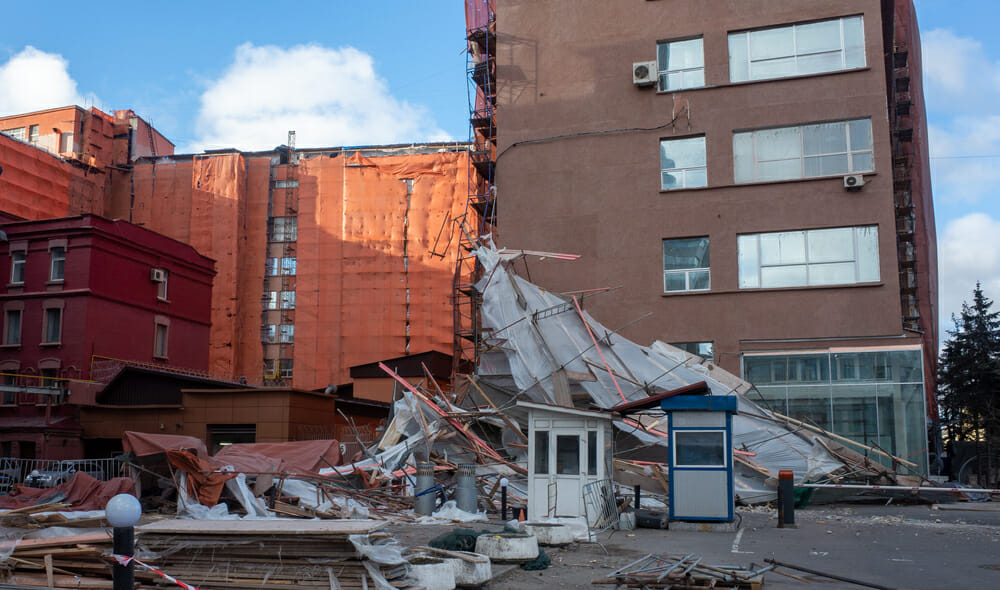
First Response Protocols for Property Managers and Unit Owners
The moment property damage is discovered, unit owners and property managers should prioritize safety and immediate damage control. This includes ensuring all occupants are safe and, if possible, containing the source of the damage. For instance, in the event of a burst pipe, the first step is to locate and shut off the main water supply to prevent extensive water damage. As one expert humorously put it, “Turning off a leaky dishwasher is the homeowner’s version of ‘stop the bleeding’ in a medical emergency.”
Next, it is crucial to document the damage thoroughly before any repairs begin. This means taking abundant photos and videos from various angles, capturing both the extent of the damage and the surrounding unaffected areas. This visual evidence will be invaluable for the insurance adjuster’s evaluation.
Simultaneously, notify both your insurance agent and the property association or manager. While your agent can initiate the claim process and provide policy-specific guidance, the association or property manager often has a vetted list of preferred contractors for emergency mitigation, which can expedite the response. Prompt notification is a policy requirement, though the exact deadline for reporting damage can vary. However, delaying notification, especially for natural disaster damage, can lead to claim denial if it prejudices the insurer’s ability to assess the damage. For instance, notice of natural disaster damage must typically be given within two years of the event, but delays beyond three months could be problematic.
Preventing Secondary Damage Before Adjuster Inspection

Mitigating further damage is not just a best practice; it’s often a policy requirement. Failure to take reasonable steps to protect your property can lead to partial or total claim denial. These steps include:
- Containing Water: For water intrusions, this might involve shutting off water, extracting standing water, and using dehumidifiers or fans to dry affected areas.
- Securing Openings: After wind or impact damage, cover broken windows or holes in the roof with tarps or plywood to prevent rain entry or further structural compromise.
- Temporary Shoring: For structural damage, temporary supports may be necessary to prevent collapse or further shifting.
- Mold Prevention: Rapid drying is key to preventing mold growth, which can quickly turn a water damage claim into a much larger, more complex issue. Document all mitigation efforts, including moisture meter readings, with photos and receipts.
As one property manager anecdote highlighted, “A property manager who had previously secured a contractor list was able to dispatch a mitigation crew within hours, reducing water damage by 30%.” This proactive approach underscores the value of pre-loss preparedness.
Assessing Coverage: Covered Perils vs. Policy Exclusions
Understanding what your building insurance policy covers – and, more importantly, what it explicitly excludes – is fundamental to a successful claim. Not all damage is a “covered loss.”
Differentiating Ground Up vs. Top Up Coverage Structures
In the realm of commercial and multi-unit residential insurance, it’s common to encounter different coverage structures:
- Ground Up Coverage: This typically refers to a comprehensive policy that covers the entire building from the ground up, including structural elements, common areas, and sometimes even fixtures within individual units, depending on the policy wording. This is often the master policy held by a homeowners association (HOA) or property management.
- Top Up Coverage: Also known as “walls-in” or “HO-6” (for condos), this type of policy covers the interior of a unit, from the “walls in,” complementing the master “ground up” policy. It covers personal property, improvements made to the unit, and sometimes the drywall and fixtures. Unit owners should understand their individual policy’s relationship to the master policy.
Critical Exclusions That Lead to Denied Claims
Insurance policies are designed to cover sudden and accidental losses, not long-term issues. Common reasons for claim denial often stem from these critical exclusions:
- Wear and Tear/Lack of Maintenance: Policies typically exclude long-term damage resulting from wear and tear, lack of maintenance, or gradual deterioration. If you cannot pinpoint the exact time of the damage, coverage issues are likely. For example, a leaking roof with no direct physical damage (like shingles blown off by wind) will likely be excluded, providing no coverage for repairs or resulting water damage.
- Clogged Drains: Interior water damage caused by roof drains clogged by debris during a storm is often an excluded claim under most policies, citing the ‘lack of maintenance’ exclusion.
- Wind-Driven Rain: Wind-driven rain causing interior damage is typically excluded unless there is damage to the roof or exterior wall first, through which the rain entered. Some insurance companies’ policy forms are exceptions, so always review your specific policy.
- Delayed Notification: As mentioned, significant delays in reporting damage can materially prejudice the insurer’s ability to assess, potentially leading to denial.
Understanding these nuances is crucial for determining if your damage is a covered loss.
Covered Perils (Examples) Common Commercial Policy Exclusions (Examples) Fire, lightning, explosion Wear and tear, gradual deterioration Storm, wind, hail, flood Lack of maintenance, clogged drains Burst pipes, water damage Mold (if preventable), insect/rodent damage Theft, vandalism Earth movement (earthquake, landslide) Impact by vehicles/aircraft Nuclear hazard, war Collapse Intentional acts, faulty workmanship
Step-by-Step Overview of the Commercial Building Claim Process
The building insurance claim process, particularly for commercial properties, involves several distinct stages, each requiring attention to detail and proactive engagement. From initial notice to final settlement, understanding these steps is vital for a smooth recovery.
Timeline and Documentation Milestones in the Commercial Building Claim Process
After initial mitigation, the formal claim process begins. Here’s a general overview:
- Notice of Loss: Contact your insurer immediately. Provide basic details about the incident.
- Claim Assignment: An adjuster is assigned to your claim.
- Initial Inspection: The adjuster will schedule a visit to assess the damage. It is highly recommended that the policyholder or their representative (e.g., property manager) be present during this inspection.
- Documentation Submission: You will need to provide comprehensive documentation. This includes:
- Photo and Video Logs: Detailed visual records of all damage before repairs.
- Home Inventory: A list of all damaged personal property or business contents, including estimated values and purchase dates. Regularly updating a home inventory (every 6-12 months) can significantly simplify this step.
- Contractor Estimates: Obtain multiple repair estimates from trusted, licensed contractors.
- Repair Invoices: Keep meticulous records of all expenses related to mitigation and temporary repairs.
- Communication Log: Maintain a detailed record of all interactions with the insurer, including dates, times, names, and summaries of conversations.
- Proof of Loss: Your policy may require a formal “Proof of Loss” statement, often within 60 days of the insurer’s request, detailing the damage and claim amount.
- Assessment and Schedule of Works: After the adjuster’s inspection and review of documentation, the insurer will provide a decision and often a “Schedule of Works,” which is a detailed list of covered defects and required repairs.
- Negotiation and Settlement: The insurer will make an offer. For complex or high-value claims, this may involve negotiation, potentially with the assistance of a public adjuster. Settlement can be a cash payment, replacement, or direct payment to contractors. The insurer may withhold a retention percentage (e.g., 5% for claims under €40k, 10% for claims over €40k) until repairs are completed and verified.
For a deeper dive into the specific nuances of the commercial building claim process, including managing expectations and maximizing recovery, further resources are available.
Navigating the Commercial Building Claim Process for Structural vs Contents Losses
The claims process can differ based on whether the damage is to the building’s structure or its contents.
- Structural Damage: This involves components like walls, roofs, foundations, and built-in fixtures. The focus is on the cost to repair or rebuild. For residential buildings under EQC insurance, the area of the dwelling must constitute 50% or more of the total area of the building. Mixed-use buildings require calculations to determine the residential percentage for coverage.
- Contents/Business Personal Property (BPP): This includes furniture, equipment, inventory, and other items not permanently affixed to the building. The valuation method for these items is crucial.
Feature Actual Cash Value (ACV) Replacement Cost Value (RCV) Definition Cost to replace item minus depreciation Cost to replace item with new, comparable item Payout Lower, as it accounts for age and wear Higher, as it covers full cost of new item Benefit Often standard for older items, lower premiums Restores property to pre-loss condition, higher premiums Claim Process Single payment, often quicker Initial ACV payment, then RCV payment after repairs/purchase Example 10-year-old computer: paid out at depreciated value 10-year-old computer: paid out for a new equivalent model
Strategic Financial Decisions: Deductibles, Loss History, and Filing Thresholds
Filing a claim is not always a straightforward decision; it involves strategic financial considerations related to your deductible, the cost of repairs, and the potential impact on future insurance premiums.
Deductible Analysis: Out-of-Pocket vs. Filing a Claim
The deductible is the amount you must pay out-of-pocket before your insurance coverage kicks in. If damages do not exceed the policy’s deductible, there is no reason to file a claim, as the carrier is not likely to make any payments.
Before filing, it’s prudent to obtain a contractor’s estimate for the repair costs. Compare this estimate to your policy’s deductible. If the damages are only slightly above the deductible, or even below it, paying for repairs out-of-pocket might be the more financially sound decision. For instance, in a hard insurance market, it may be strategic to avoid filing a claim for a payout of less than $5,000, as any claim that gets paid out is a negative mark against the building’s insurance and could negatively affect future premiums. Deductibles for commercial property policies commonly start at $10,000, making this calculation even more critical.
Claim Frequency vs. Shock Losses in Policy Renewals
Insurance carriers evaluate claims frequency when deciding whether to insure a risk and setting premiums. This is particularly relevant in today’s hard insurance market. One large “shock loss” in the six-figure range is often viewed as more favorable than five small losses that pay out a few thousand dollars each. A history of frequent, small claims can signal higher risk to underwriters, potentially leading to increased premiums, higher deductibles, or even non-renewal of the policy.
Property managers and unit owners should therefore carefully weigh the long-term financial implications of filing small claims against the immediate benefit of a payout. Maintaining a low claims frequency can be a strategic advantage in securing more favorable insurance terms.
Frequently Asked Questions About Building Insurance Claims
Here are answers to some of the most common questions that arise during the building insurance claim process.
When should I contact my insurance agent versus the property manager or association?
You should typically contact both promptly.
- Your Insurance Agent: Contact your agent first to initiate the claim, discuss your specific policy coverage, and understand your immediate obligations. They can provide guidance on whether the damage is likely a covered loss and what documentation you’ll need.
- Property Manager/Association: Notify your property manager or association immediately after contacting your agent. They need to be aware of damage to common areas or units within their purview. They can also provide a list of vetted contractors, coordinate with the master policy if applicable, and assist with access for adjusters and contractors. Including the association liaison and property manager in all claim communications is a best practice.
What should I do if an insurance adjuster underestimates or denies the claim?
If you believe the adjuster’s assessment is too low or your claim is unfairly denied, you have several avenues:
- Request a Detailed Explanation: Ask the adjuster for a written explanation of their decision and the basis for their valuation.
- Provide Additional Documentation: Gather more evidence, such as additional contractor estimates, engineering reports, or detailed inventories, to support your claim for higher costs.
- Speak to a Supervisor: If you cannot resolve the issue with the assigned adjuster, request to speak with their supervisor.
- Consider a Public Adjuster: For high-value claims (generally over $10,000), consider hiring a licensed public adjuster. Public adjusters work exclusively for the policyholder and can negotiate with the insurance company on your behalf, often increasing settlements significantly (some sources suggest by 3-4 times the initial offer).
- Dispute Resolution: Your policy may outline an appraisal process or other dispute resolution mechanisms. For instance, you may have the right to a review via a civil tribunal within 28 days of a decision in some jurisdictions.
How does underinsurance impact a commercial property payout?
Underinsurance occurs when the declared sum insured for a building is less than its actual rebuild cost. This can significantly reduce your claim payout due to an “average clause” or “coinsurance” provision in your policy. If you are underinsured, the insurer may reduce the claim payment proportionally. For example, if your building is insured for $300,000 but would cost $400,000 to rebuild (a 25% shortfall), a $100,000 claim might only pay out $75,000. This reduction typically applies unless the shortfall is within a specified threshold, often 15% of the full rebuild value. It is crucial to maintain an accurate sum insured that reflects current rebuild costs to avoid these penalties.
Conclusion
Navigating the building insurance claim process can indeed feel like a maze, but with a clear understanding of the steps, proactive measures, and diligent documentation, property owners and managers can significantly improve their chances of a successful outcome. From the immediate aftermath of damage and crucial mitigation efforts to understanding policy coverages, deductibles, and the strategic implications of claim frequency, each stage demands informed decision-making. As of October 2026, staying prepared and knowledgeable remains the best defense against the financial and operational disruptions that property damage can bring. By prioritizing claim readiness, meticulous record-keeping, and proactive risk management, policyholders can master the building insurance claim maze and achieve optimal recovery.